Features
One platform for the money, the building, and the people
Everything a BC strata corporation needs to run smoothly — without stitching together five different tools.
Finances
Levies, payments, and arrears that reconcile themselves
- ✓Generate levies per unit or on a recurring schedule
- ✓Payments auto-allocate oldest-first, with credit balances and payment plans
- ✓Automated late fees and staged arrears recovery (reminder → demand → lien)
- ✓Bank reconciliation, owner statements, and receivables aging
The building
Maintenance, sub-trades, and a resident issue portal
- ✓Residents report repairs, complaints, bylaw, and safety issues in one place
- ✓Per-strata routing rules send each report to the right vendor or manager
- ✓Turn a report into a maintenance work order in a click
- ✓A rated sub-trade roster with your Recommended vendors surfaced first
Governance
Meetings and votes that meet the rules
- ✓AGM / EGM / council meetings with statutory notice checks
- ✓Structured agenda builder with per-item time budgets
- ✓Motions raised in a meeting become tracked e-votes with proxies
- ✓RSVPs, quorum tracking, and attendance capture
Compliance
The BC Strata Property Act, built in
- ✓Form B and Form F information certificates
- ✓Depreciation reports and reserve / contingency fund planning
- ✓Schedule of unit entitlement with per-lot share and levy allocation
- ✓Insurance tracking with renewal alerts
People & communication
Owners, renters, and every notice you send
- ✓Owners set up their renter with exactly the access they choose
- ✓60+ merge-ready notice, violation, and letter templates
- ✓A document library with official records and packages
- ✓In-app notifications and email, per unit
The product
Eight screens, with the numbers left in
Captured from a working demo corporation — twelve lots, a year of levies, a posted ledger. The owners and units are invented; the arithmetic is not.
Overview
What needs you, before anything else
The dashboard opens with what is wrong, not with a wall of statistics. Arrears, setup gaps and occupancy come first; the module tiles are underneath for when nothing is on fire.
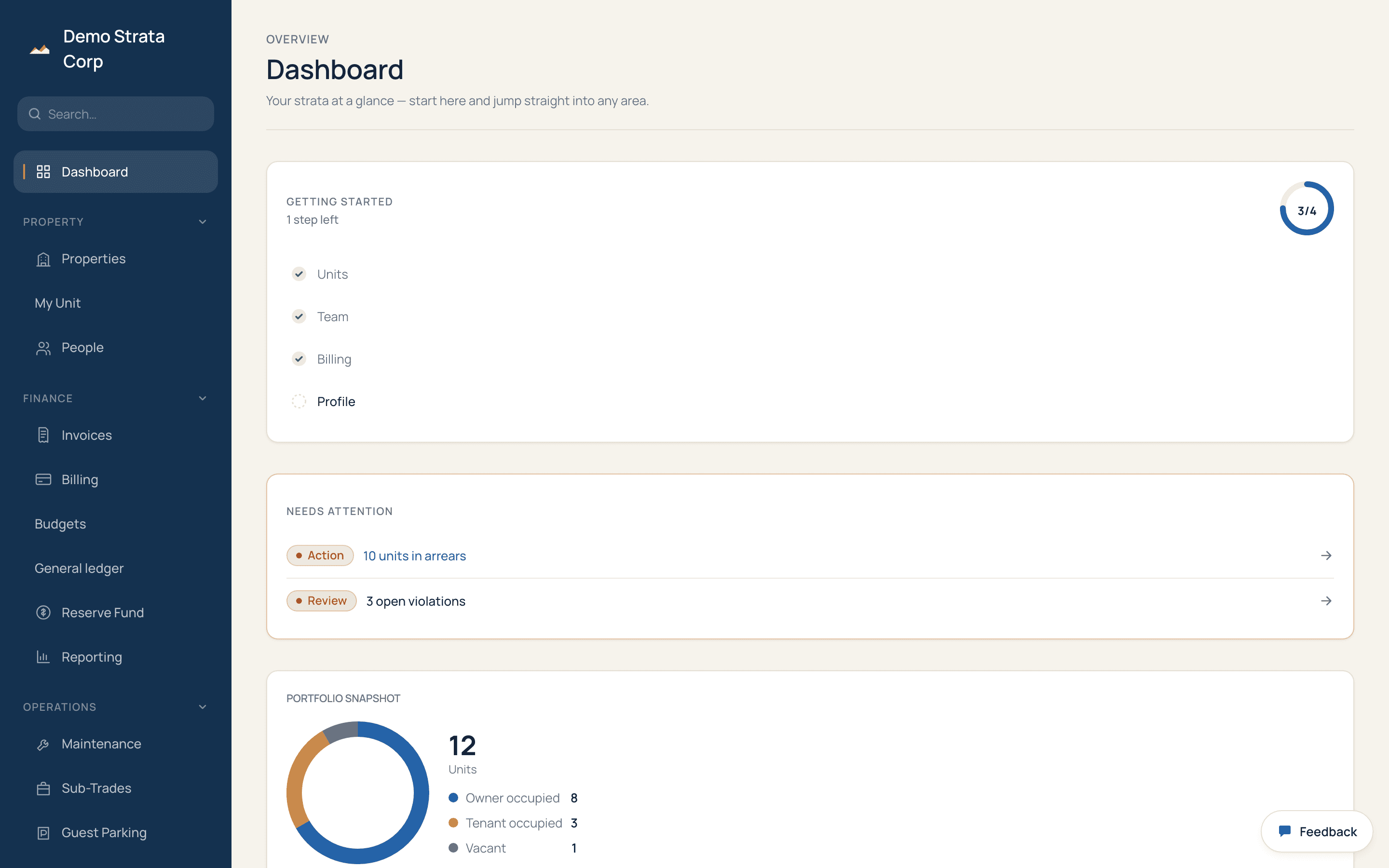
Needs attention sits above the fold, ahead of the portfolio snapshot.
Trust accounting
Double entry, with the funds kept apart
Operating and contingency reserve are separate funds on every line, as section 92 requires — not one pot with a label. Invoices, payments and expenses post themselves, and the trial balance is the proof it adds up.
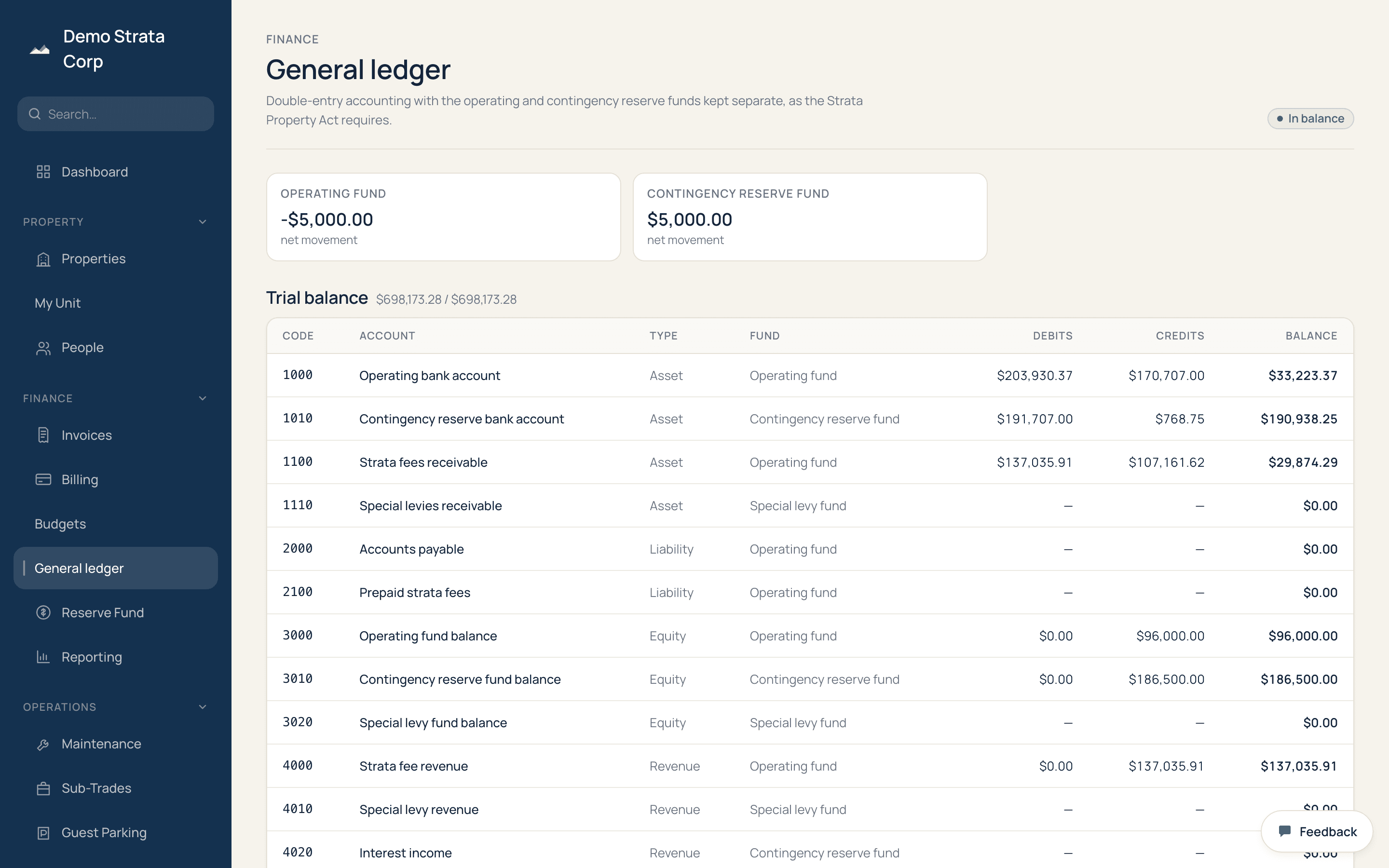
Debits equal credits, and the operating and CRF balances are reported independently.
Statutory certificates
A Form B without the afternoon
An information certificate is legally required when a lot sells, and assembling one by hand means cross-referencing fees, arrears and the reserve fund. Each row here is a point-in-time snapshot of the figures as they stood at issuance.
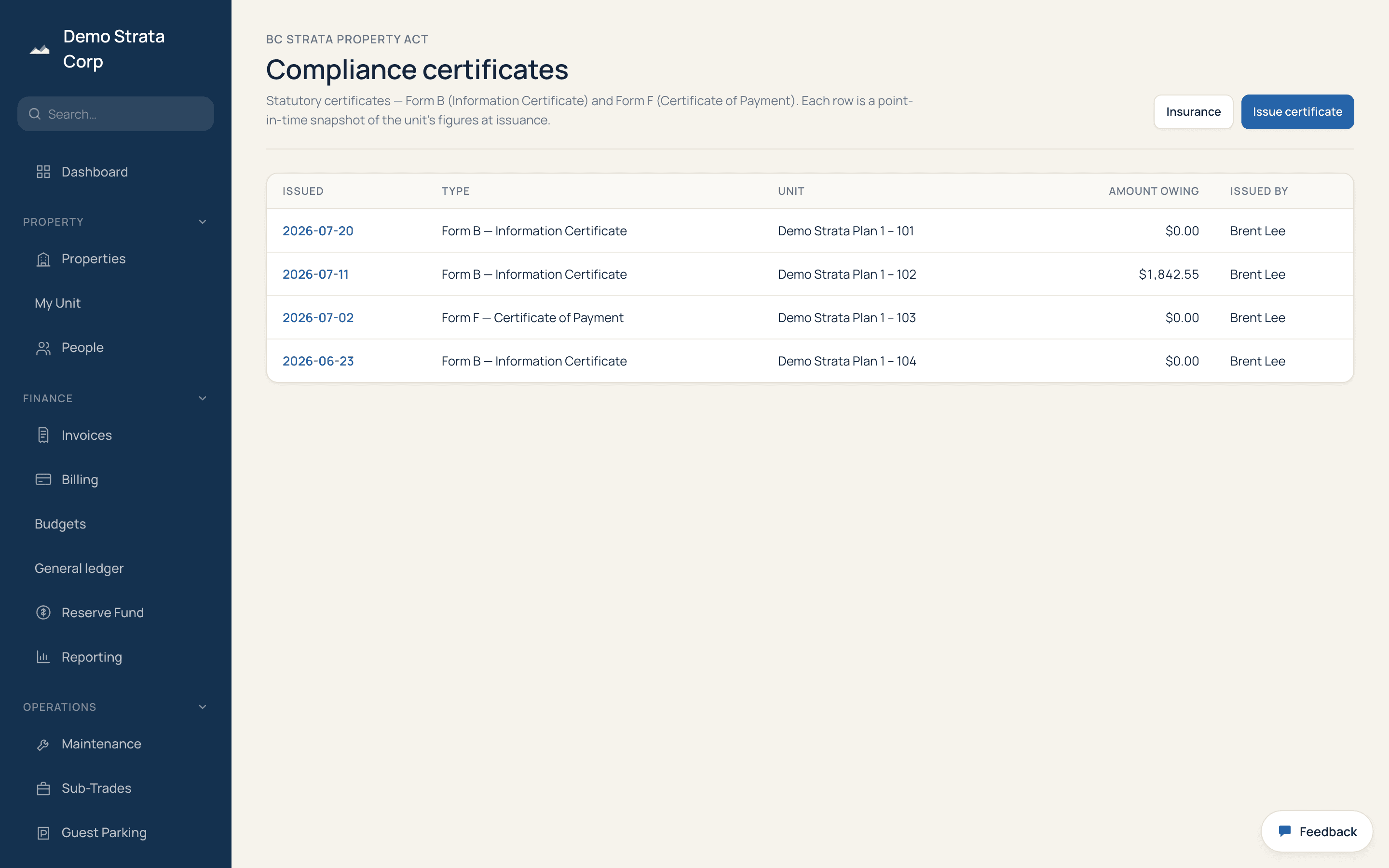
Form B and Form F in one register, each stamped with what was true that day.
Reporting
Invoiced, paid, outstanding — and what it means
Financial, arrears, reserve and maintenance summaries across the whole portfolio, with a CSV export for the accountant. The charts are drawn from the same figures the ledger reports, not a parallel calculation.
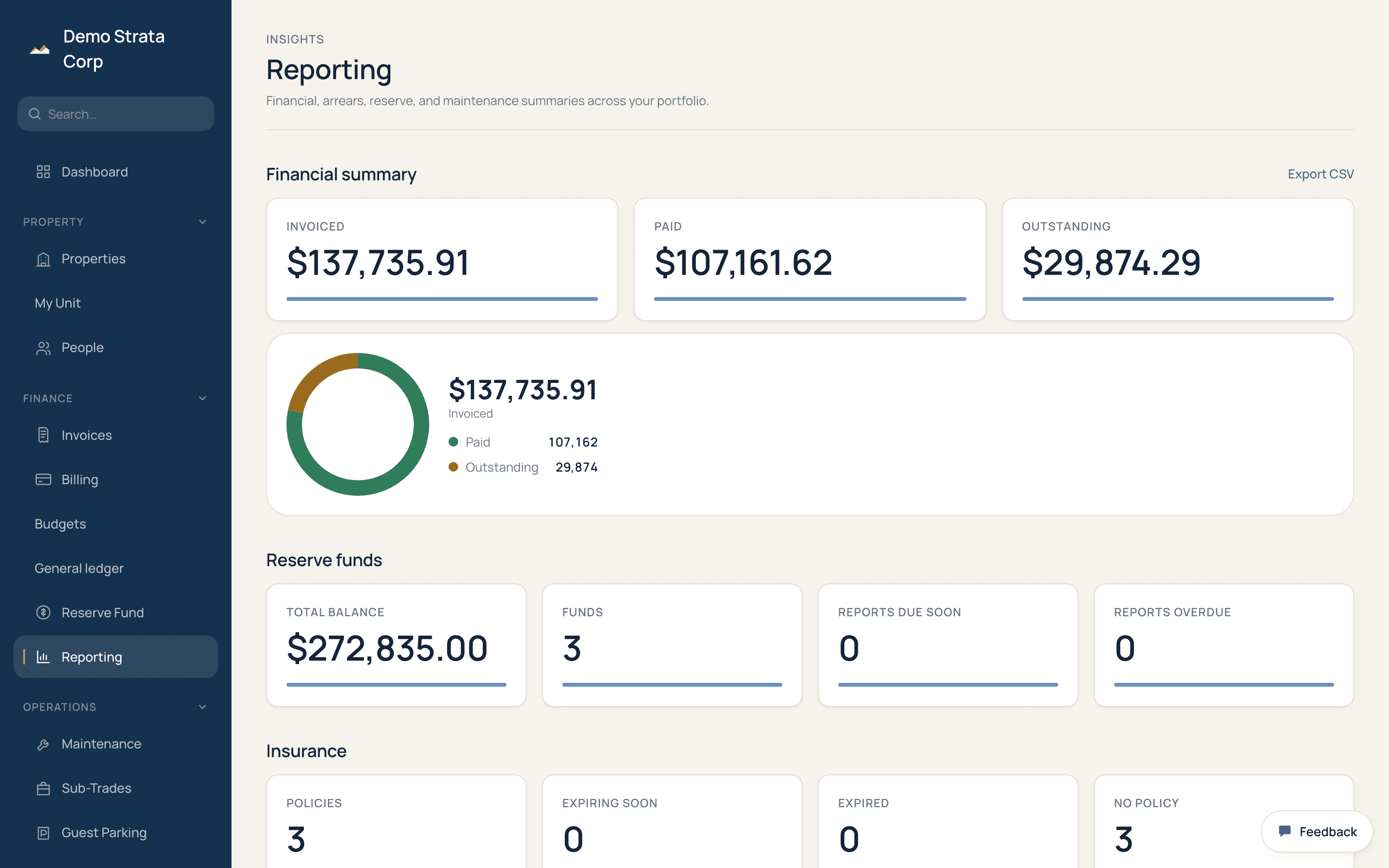
Outstanding is the number a treasurer is asked for at every meeting.
Reserve fund
The contingency fund, and where it is heading
Balance, contributions and a projection against the target, plus depreciation-report status. Reserve-fund tooling is thin across the market; a BC strata is required to plan for it under section 94.
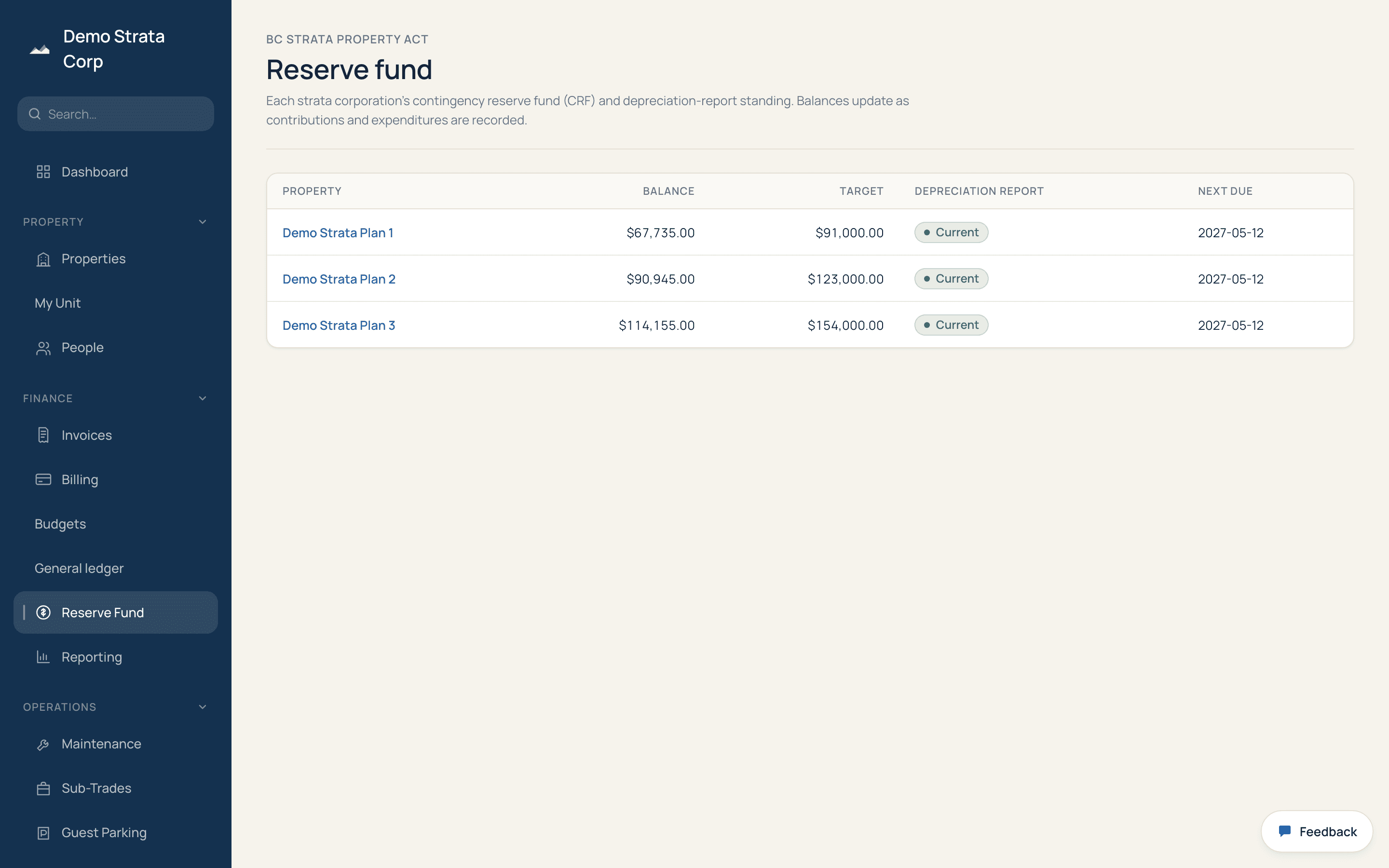
The projected tail is dashed, because a forecast should not look like a fact.
Budgets
Budget versus actual, aware of the calendar
Sixty percent spent means very different things in month two and month eight, so variance is measured against the pace of the year rather than the raw total. Unbudgeted spend is surfaced rather than folded into a category.
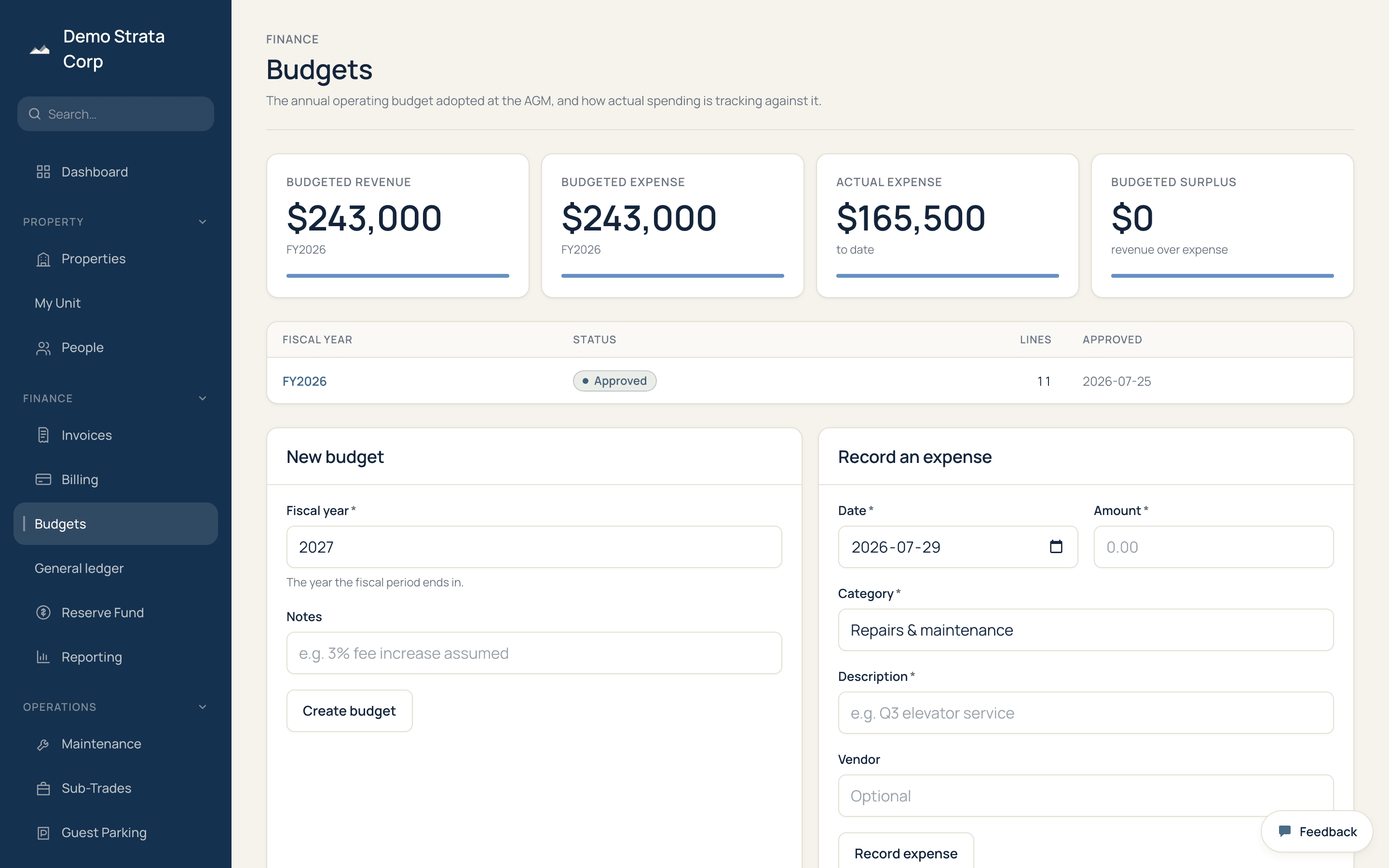
Actuals come from the expense ledger and from invoices, not from re-keyed figures.
Enforcement
Bylaw enforcement that leaves a trail
Complaints move from open, to notice sent, to fine issued, to resolved — and the record of which step happened when is what makes a fine defensible if it is ever challenged.
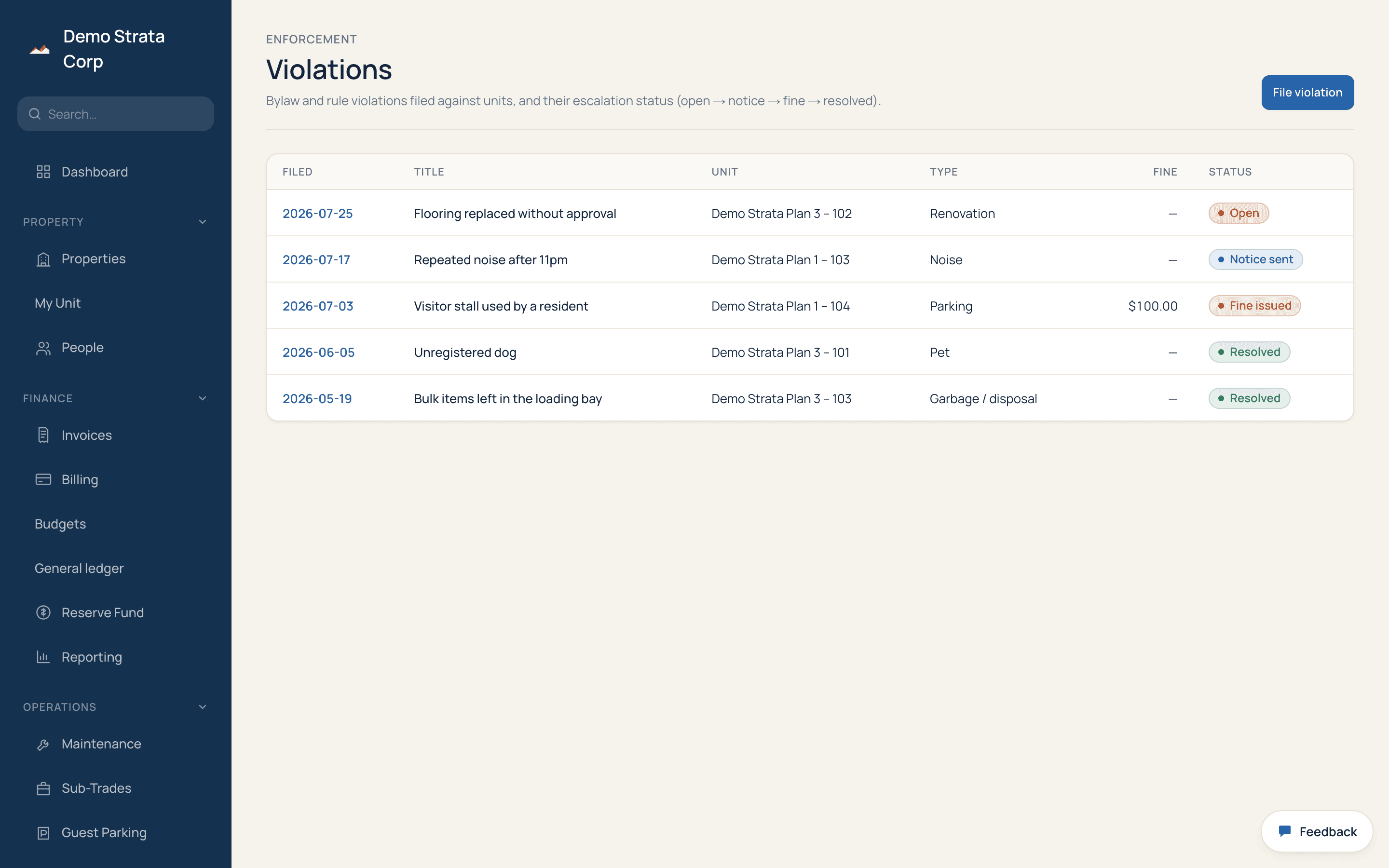
Every state in the lifecycle is visible at once, not just the open ones.
Governance
Meetings that meet the notice rules
AGMs, EGMs and council meetings with statutory notice periods, quorum tracking and an agenda builder. Minutes live with the meeting rather than in someone's documents folder.
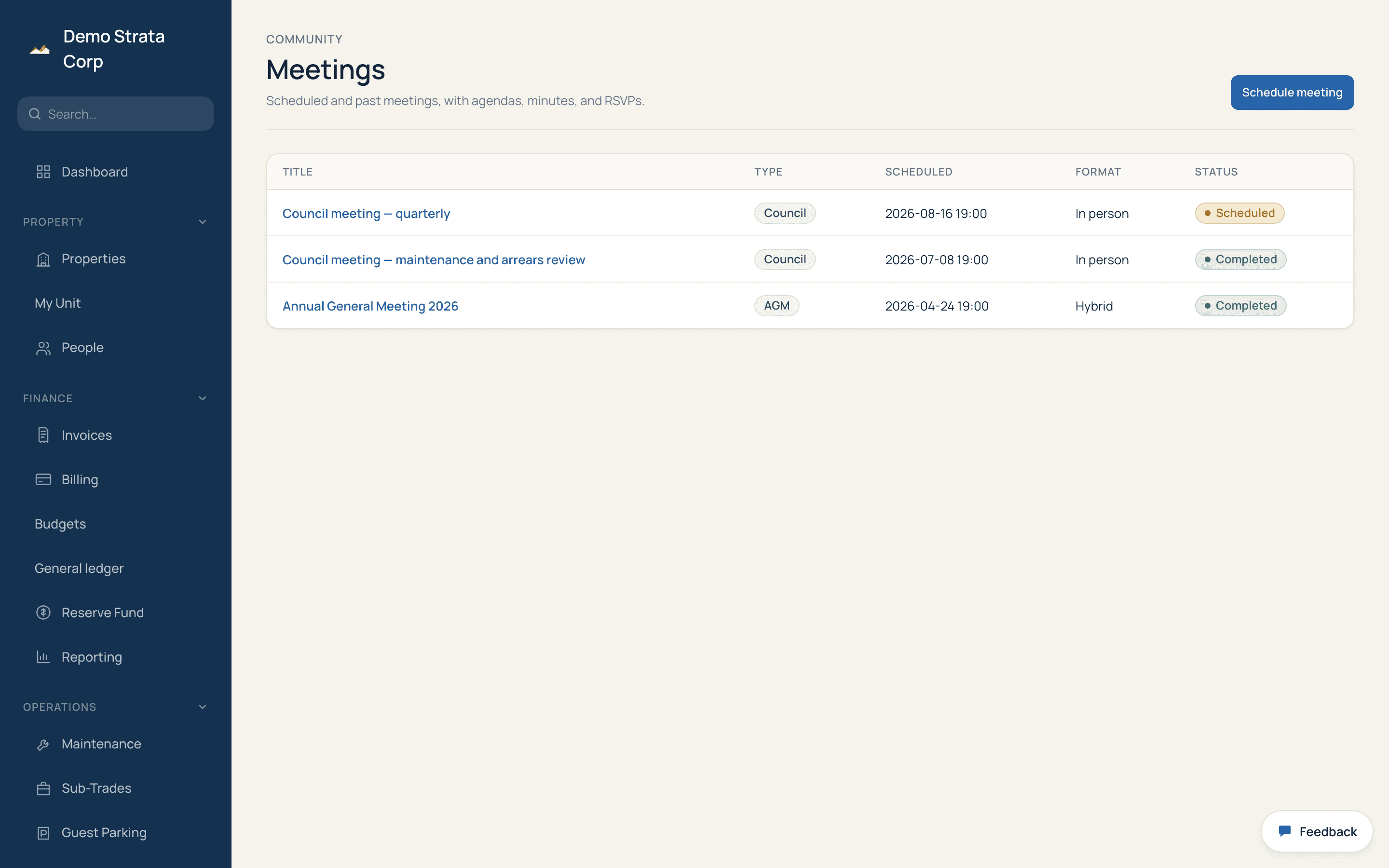
Notice dates are checked against the two-week statutory minimum for an AGM.
BC compliance
A Form B without the afternoon
An information certificate is legally required when a unit sells, and assembling one by hand means cross-referencing fees, arrears and the reserve fund. Blue Strata reads them live and issues the certificate on your letterhead.
Trust
Your data cannot leak into another strata’s
Isolation is enforced by Postgres row-level security, not just by the application asking nicely. Every query is scoped to the signed-in member’s strata at the database, so even a bug that forgot a filter could not return another corporation’s records.